My Read of the Month:

Title: Think Big: Make It Happen in Business and Life
Author: Donald J. Trump and Bill Zanker
Published: 2007
Genre: Business/Leadership
Ratings: 4.6 out of 5 stars

Donald Trump is arguably one of the most recognised businessmen in the world. His extremely successful career as Chairman and CEO of the Trump Organization has made him a highly sought after speaker for many who are hungry to emulate his success.

In this book, Trump not only reveals some of his personal key principles and business philosophy, he also reveals his larger-than-life personality. And he is definitely kick ass!

Trump’s first advise to those who want to be financially successful is to find one’s passion. He explains that if you love what you do, you’re going to work harder, you’re going try harder, you’re going to be better at it, and you’re going to enjoy your life more.

He encourages his readers to find a mission or purpose that go beyond monetary rewards that they can be passionate about. If they find their passion in doing something useful for people, the money will follow.

Another one of his advises is to adopt the traits of all highly successful individuals- thinking big. Displaying a big-thinking attitude stems from self-belief in his/her ability and worth. According to Trump, that kind of attitude is more important than one’s IQ as how big a person thinks determines how big a success he/she will become.

Though I do appreciate Trump’s no-nonsense leadership style, but I do not admire some of his traits as a successful businessman. However, he is incredibly open about them. He shares much of his ‘juicy’ personal life and experiences  in this book.

For instance, Trump readily admits that it is mostly his fault that led to his two failed marriages. He is now married to his third wife. On his ex-wives, he said, “I just know it’s very hard for them (Ivana and Marla) to compete because I do love what I do. I really love it.”

Like him or not, you got to give him credit for where he is today for his persistence in achieving his dreams. Through this book, I now have a newfound respect for this man.

Who should read it: For those who want to learn how to get rich in the business world.

My Read of the Month:

Title: ZOOM: The Global Race to Fuel the Car of the Future
Author: Iain Carson and Vijay V. Vaitheeswaran
Published: 2007
Genre: Economics/Politics/Environmental/Business
Ratings: 4.6 out of 5 stars

Did you know that the world consumes about 80-90 million barrels (per barrel = 100–200 litres) of oil each day? And the United States accounts for a quarter of that?

In fact, the US consumes more oil than South America, Europe and Africa combine. Clearly, this nation has quite a fixation on oil.

Interestingly, this book reveals a consequential meeting that took place towards the end of the World War II which would change the course of world history as we know today.

In 1945, Franklin Roosevelt, then US President made a pact with King Ibn Saud, father of Saudi Arabia, home to the biggest oil reserves of oil on the planet, then and now.

That historical pact between the two leaders was the US’ guaranteed access to Saudi Arabia’s vast quantities of oil and in return, Roosevelt promised full military support to the king and his clan.

In the decades since, the impact of that alliance has given rise of the Oil Curse that has plagued our world economy. Think gulf war and the Iraqi invasion by the US and you get the parts of that big picture.

As they say, “Study the past to understand the present in order to peek into the future”. And that’s what this investigative book does as it traces the emergence oil and cars that explains the forces of geopolitics and economics we can observe today.

I like that this book aims to be objective and presents both perspectives of those for oil and those against. This makes it a credible read with its avoidance of being bias or over-selling the opinions of the authors.

The only shortcoming of this book is that it is primarily addressed to Americans. Not that it is any fault of the authors since our economic and environmental woes we faced today are linked to this powerhouse nation, the US. But presenting this as a global challenge for everyone would be the next better approach.

Who should read it:For those interested in world politics or who wish to better understand our environmental challenge in tackling the world’s addiction to oil.

My Read of the Month:

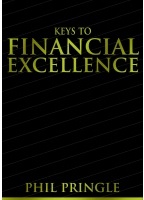
Title: Keys to Financial Excellence
Author: Phil Pringle
Published: 2003
Genre: Financial stewardship/Self-improvement
Ratings: 3.7 out of 5 stars

The subject of prosperity is a sensitive one even though it is largely accepted that there is no lack whatsoever to the abundance that God has for us as His children.

Understanding that the stakes are high for the Church not to prosper, Phil Pringle attempts to provide a complete and balanced view on the biblical aspect of financial excellence; where we should not feel that it is wrong to prosper.

I liked that he addressed the perception that giving alone is all there is to prospering in life. And the idea that if people simply give, they will automatically receive abundance is faulty.

He inserts that working faithfully and diligently is essential too. According to him, our work and our desire to work ought to be motivated not by money, but by faith, hope and love. Hence, having the right attitude and motivation paves the way for abundance to be released upon our lives.

There’s quite a comprehensive portion of this book dedicated on principles of tithing which I believe would be very helpful for those who question the validity of such a practice as a New Testament Church.

For me, I concur with the author that tithing is an absolute responsibility as a believer. It is giving that reflects our faith- who our God is and who we follow and trust.

Overall this is an easy-to- read book for such a heavy and controversial topic. And one must applaud Phil’s boldness for even considering writing such a book which would have unleash the wrath of Christian detractors that are against prosperity teachings.

Who should read it: For all Christians, to better understand about biblical finances and to break free from a poverty mind-set.

My Read of the Month:

Title: Changing Church: How God Is Leading His Church Into the Future
Author: C. Peter Wagner
Published: 2004
Genre: Church Growth/Spiritual Leadership
Ratings: 4.6 out of 5 stars


There’s no denying that God is doing a new thing in His Church in this 21st century. But what exactly is He doing? This is what this book attempts to uncover.

Peter Wagner, of whom I had the privileged to watch preached, does a fantastic job in succinctly presenting the changing trends of the Church. I really wish someone had recommended me this book earlier before.

According to Wagner, we are now in an era termed the Second Apostolic Age. This describes the age of the 21st century in which the Holy Spirit is strongly speaking to the churches of our generation to initiate a paradigm shift from being church-centred to being kingdom-centred.

In other words, the concept of the Kingdom of God has begun to expand significantly. And this has led to a radical shift in understanding  what being the Church means and as God destined.

For instance, he explains that “no longer is it adequate to suppose that our ultimate task here on Earth is the growth of the Church. Church growth remains crucial, but the Kingdom goes beyond that”.

In the old wineskin as he coins, the Church emphasizes on evangelism and church planting as activities central to the mission. But with the new wineskin, territorial domination with quantifiable terms is not the main goal. The goal then, is service to God which translates to nothing less than the transformation of society.

Another reason why this book is a pleasure to read in spite of it being written in a scholarly manner is because Wagner shares his personal experiences and opinions. This provides not only credibility but a good depth into this subject.

As mentioned, I wish I had read this book earlier with its insights that would have served me well to make sense of my past situation. Nonetheless, reading it now has affirmed and confirmed the revelations and deductions I received.

This is a must-read for every Christian as Wagner covers a number of compelling arguments such as the corporate spirit of religion and religious covenant. With better understanding where we are and where we’re heading, would serve us well to evaluate our values and priorities towards aligning with God and His Kingdom.

Who should read it: For Christians especially church leaders or pastors, that are hungry for God and His will for the Church.

My Read of the Month:

Title: Winning Intl: The Ultimate Business How-To Book –2005 publication.
Author: Jack Welch with Suzy Welch
Published: 2005
Genre: Business/People Management
Ratings: 4.6 out of 5 stars

Jack Welch needs no introduction. He is the former chairman and CEO of General Electric (GE), a global conglomerate corporation. He spent his entire 40-year career since graduating with GE before retiring in 2001.

In this book, Welch taps on his years of corporate wisdom and experiences in addressing some of the most common issues or questions that professionals face everyday. Organised and presented in a systematic fashion, this book is well-paced and addictive with a mix of easy-to-relate and interesting insights and stories.

I like that Welch was equally honest about some of his mistakes as he is with his successes. Much of his views provides us with useful tips on how to be a better employee in contributing to the organisational’s growth. And in the same token, it also empowers one to be a better corporate leader in managing people and resources effectively.

One important trait or way of doing business which Welch’s emphasises is candor. This refers to communicating with frankness or straightforwardness. According to him, the lack of candor is damaging and do not build an environment where ideas, comments or criticism can be expressed to stimulate real debate. I agree.

He explains that in an organisation with a lack of candor, its people are usually remain silent in order to feel better or to avoid conflict. They sugarcoat bad news in order to maintain appearances. They keep things to themselves, hoarding information. And when an organisation has a high degree of candor, everything operates faster and better.

However, Welch’s business management philosophy is not without controversies. One of them is differentiation where he distinctively categories employees by their performance: the top 20%, middle 70% and bottom 10%. But understanding the industrial era that he emerged from which formed most of his corporate beliefs, it should not be surprising that the bottom line or profits is always the main priority.

That said, in today’s era, there’s a new business approach emerging and that’s the 3’p bottom line- profits, people and planet. And I believe that’s understandably lacking in his book. Nonetheless, this remains an excellent book about winning and delivering results in the marketplace from one of corporate America’s savviest minds.

Who should read it: For working professionals- leaders and managers. Also applicable to church or ministry leaders.

My Read of the Month:

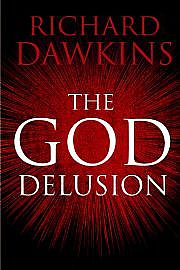
Title: The God Delusion
Author: Richard Dawkins
Published: 2006
Genre: Philosophy/Spirituality
Ratings: 3.7 out of 5 stars

Dawkins is one of today’s most vocal advocates for atheism. And he is not the least apologetic for his cause against religion that promotes creationism and the concept of intelligent design.

Right from the onset, he boldly spells his intention to convert believers in God or religious readers to atheism with his book; making it sound like a declaration of war upon mainstream religion.

Reading Dawkins’s convincing case against religion was both refreshing and sad. He argues how religion leads to a laziness and defeated faculty of the human’s reasoning where “any lack of data, or by lack of understanding are automatically assumed to belong, by default to God.”

To him, this represents a failure in a human’s imagination and critical thinking. Other bad affects he cited are how religion teaches one that an unquestioning faith is a virtue and is undoubtedly a divisive force in society. These were just some of the impressionable points he had raised that were backed with widely-known past incidents and cases.

It is sad that some of his argumentative points do carry an element of truth and highlights the sort of negative perception we (Christians) give to non-believers of God. Somehow being a people of the book has locked our mind rigidly and easily blocked or readily dismissed anything that doesn’t fit into the book; only “black and white” (but no grey areas).

Nothing can be further from the truth that the bible which contains the principles and precepts of God is intended to liberate our minds and free our spirits to become who we were created to be- genuine loving and highly intelligent people just as God is Agape and Elohim. But on the contrary, what we seemingly interpret from bible turns us into sheltered, hypocritical and judgemental people.

It is sad because most of Dawkins’ encounters with Christianity that he shares in this book has been nothing short of appalling. It is little wonder that he has not been convinced of an existence of a God since little or nothing of God could be drawn from his experiences with believers.

Having said that, knowing God is not achieved solely with the mind or intellect. Relating with God has to be engaged with spirit to spirit. One without the other would not allow one to fully experience Him or to manifest His existence.

Who should read it: All Christians and especially those who are interested in apologetics.

My Read of the Month:

Title: The Book that Transforms Nations- Asia Edition
Author: Loren Cunningham
Published: 2006
Genre: Missions/Church history
Ratings: 4.6 out of 5 stars

In this awe-inspiring book, Loren Cunningham succinctly presents his readers with short stories of past reformers and various interesting case studies of transformed countries to induce readers that the bible is powerful and all capable of building a nation from scratch.

Notable nation builders such as William Carey, John Wesley, Martin Luther, John Calvin and Dr. David Yonggi Cho were some of the few names mentioned. One common trait of these mighty men of God was how they recaptured spiritual leadership in influential areas of society namely: family, religion, education, entertainment, mass media, commerce, government.

Mr. Cunningham goes to explain how these nation builders taught and discipled others and “when a critical mass of people have the Bible and apply what it teaches in their lives, a nation is transformed…whenever a critical number of people abandon the Bible and stop applying it in their personal lives, that nation begins to destroy itself.”

A case in point would be the current upheaval spiritual state of Europe that has led to economical instability. Sadly, most of the people in these nations have departed from their Christian heritage and have turned away from God. According to Loren, their (Europeans’) view of the church and belief in God have been reduced to that of being an outdated and irrelevant faith that impedes progress.

The only shortcoming of this book is that it doesn’t delve deep enough into the autobiography of these nation builders. It merely presents a summary of their highlights and accomplishments. Other than that, this book is a soul-satisfying read that never fails to stir my spirit and faith in becoming like one of His “nation builders”.

Who should read it: Mostly suitable for Christians of all stages of maturity as it presents an informative snapshots of the history and milestones of the new testament church. And highly recommended for aspiring missionaries.

My Read of the Month:

Title: Think and Grow Rich
Author: Napoleon Hill
Published: 1960
Genre: Self-development/motivational
Ratings: 5.0 out of 5 stars

How to get money is the main message of this book after observing that millions of people are paralysed with the fear of
poverty.

Though published some 50 years ago, the concepts and principles presented in this book are timeless; a product of two decades of research conducted by Napoleon Hill. Mr. Hill draws on stories of Andrew Carnegie, Thomas Edison, Henry Ford, and other millionaires of his generation to illustrate his principles.

Some of them debunked conventional financial wisdom, and were thought-provoking such as ‘knowledge is not power, but only potential power’; ‘hard work and honesty alone will not bring riches’; ‘money does not make more money’; ‘money is “shy and timid” and need to be attracted’.

However, the most priceless truth I learned from this book which was surprisingly related to achieving riches was about sex! According to Napoleon, the driving force of sex when appropriately harnessed and transmuted “is capable of lifting men into a higher sphere of thought which enables them to master the sources of worry and petty annoyance which beset their pathway on the lower plane.”

And he further added that because of this misunderstanding and misuse of sex (this great force), majority of men had lowered themselves to the status of the lower animals. Don’t you just agree?

Believe it or not, this fascinating and in-depth book is built on biblical principles and truth. That is why I found this book explosive! It really expanded my horizon to receive more from this Infinite Intelligence (a term made in this book in reference to God). And it has to be read with an objective and opened mind.

And whether the principles work or not, give me some time to test them out okay? When I reach my financial goals, I will update here in my blog. Haha…

Who should read it: Everyone should especially for those who desire (and not merely wishing) to get rich- this could also be used in its general sense of financially, spiritually, mentally and materially.

My Read of the Month:

Title: Confessions of a Radical Industrialist: Profits, People, Purpose–Doing Business by Respecting the Earth
Author: Ray C. Anderson with Robin White
Published: 2009
Genre: Environmental leadership/Business strategy
Ratings: 3.0 out of 5 stars

This book is a personal account of Ray Anderson, founder and chairman of InterfaceFlor who led his organisation and industry towards Mission Zero- a goal to use zero natural resources to manufacture and to aim for zero carbon offset in its process.

Interface is a global carpet tile manufacturer and this book depicts their trailblazing green journey from where it begun to where it is at present. At this moment, Interface has been able to cut it’s net greenhouse gas emissions by 71 percent since 1996. Achieving that while their sales increased by two-thirds and doubling their earnings.

Definitely a worthy example of business and environmental sustainability marrying together towards progress where both wins.

I like how Ray was able to integrate his Christian values into his business in regards in being environmentally responsible and sustainable. He shares how he views the Bible as an environmental handbook that commands us to conservatorship- a God-given mandate to be stewards of the environment.

Though I found the book a tat draggy at times and peppered with a little too much technical jargons that only engineers could understand, but I still enjoyed it. Truly an inspiration.

Read this book and be challenge in our linear mindset of “take-make-waste” that has been adopted from our industrial revolution to one that is “close-looped”- taking nothing new from earth to make and recycling waste to make instead!

Who should read it: Business owners and higher management. Inclusive of church leaders.

My Read of the Month:

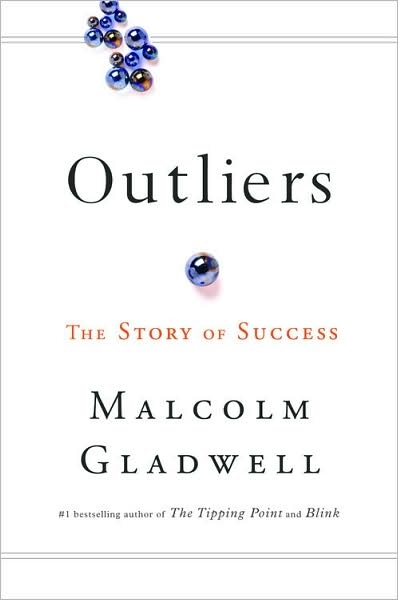
Title: , Outliers: The Story of Success
Author: Malcom Gladwell
Published: 2008
Genre: Social Psychology/Business
Ratings: 4.0 out of 5 stars

After reading Malcom’s earlier book- The Tipping Point, I thought I would grabbed my hands on this latest title. And I’m not disappointed that I did.

In Outliers, Malcom reveals secret patterns behind everyday phenomena of success. Using several case studies, Malcom goes against conventional thinking that ambition, talent and IQ are the only contributing factors to success.

These outliers (meaning something or someone who is markedly different in value from the others in sample) are outliers more because of a convergence of events entirely out of their control that have created extraordinary opportunities. And had it not been for those opportunities, they may never have become outliers.

Living in a meritocracy society, it is obvious that those who do better would be given more attention to cultivate the talent. So he investigates the possibility that success that could be a result of a random advantage. Like the month we were born in comparison to our peers?

For example, in school, a few months of maturity will likely translate to quicker comprehension, better behavior, and more likely to stand out as “brighter” than the rest, when really they’re merely older.  But the proof is in the numbers, and Gladwell presents plenty of them.

Apart from the age factor, Malcom goes on explain the factor of 10,000 hours. This means getting the chances to practice a skill for at least 10,000 hours which for instance, path the way for the Beatles and Bill Gates towards success during their time. He also includes the idea that cultural legacy as an integral part of the success formula.

In essence, Malcom concludes that outliers are products of history and community, of opportunity and legacy. Their success is not exceptional or mysterious and are grounded in a web of advantages and inheritances. All these are critical to making them who they are.

Reading this has inspired me to think beyond my lifetime and to be determined in living a solid legacy for my children and the next generation.

This is a highly entertaining and enlightening book. Go read it. You won’t regret getting your hands on this one.

Who should read it: For anyone and everyone.